
Blog / 05 Oct 2026
Forecasting Capital Markets Day Targets with Language Models
A working paper testing whether a language model can anticipate the targets companies announce at capital markets days, and whether that foresight is worth anything once the market has seen it.
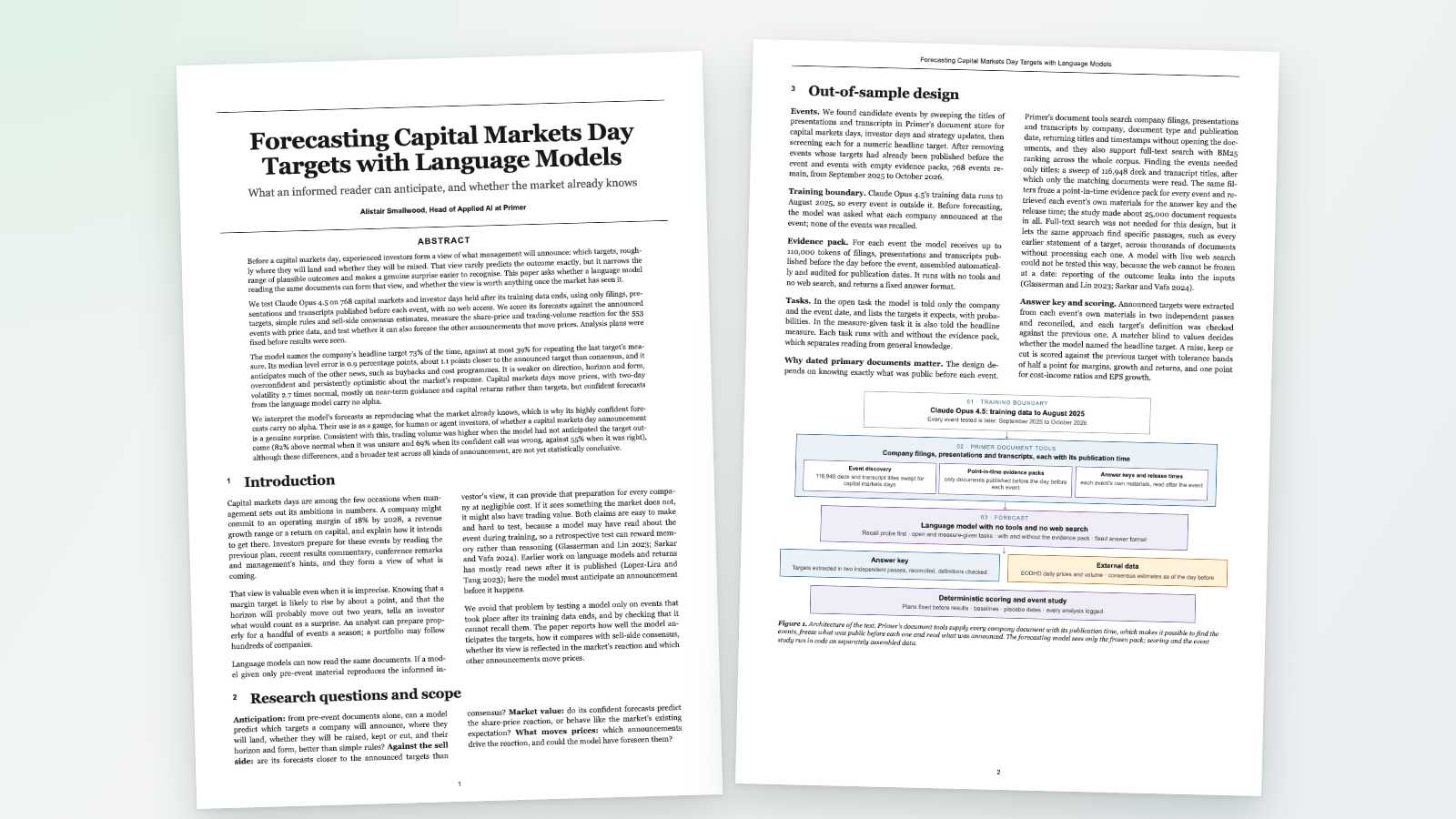
Before a capital markets day, experienced investors form a view of what management will announce: which targets, roughly where they will land and whether they will be raised. That view rarely predicts the outcome exactly, but it narrows the range of plausible outcomes and makes a genuine surprise easier to recognise.
Forecasting Capital Markets Day Targets with Language Models asks whether a language model reading the same documents can form that view, and whether it is worth anything once the market has seen it. Claude Opus 4.5 forecast 768 capital markets days held after its training data ends, using only filings, presentations and transcripts published before each event. It named the company’s headline target 73% of the time and landed closer to the announced targets than sell-side consensus. Its confident forecasts carried no alpha, though: what a careful reader can anticipate appears to be priced already, and share prices on the day followed near-term guidance and capital returns rather than the targets.