
Blog / 20 Nov 2026
Improving Forecasting with Language Models
A working paper testing whether a language model reading only company documents can see big revenue surprises coming, and how a search-and-learn loop found the change that helped.
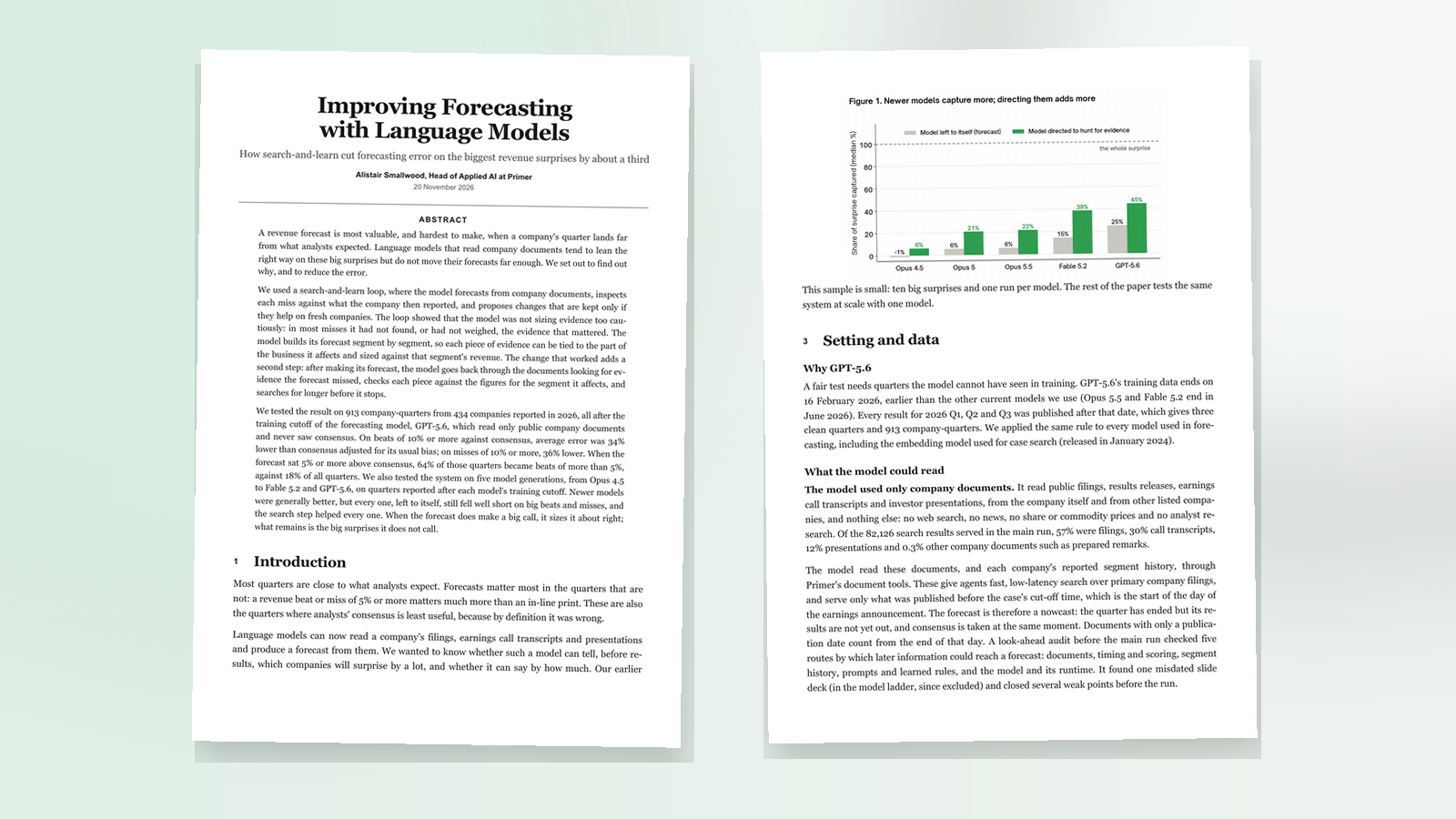
Most quarters land close to what analysts expect. The quarters that matter are the ones that land far away: a revenue beat or miss of more than 5% against consensus. Language models that read a company’s own documents tend to lean the right way on those quarters, then stop short. Newer models see more, but every one we tested, left to itself, still fell well short.
Improving Forecasting with Language Models tests a system that builds each revenue forecast segment by segment from company filings, call transcripts and presentations, then runs a second step we call the “hunt”: the model goes back through the documents looking for evidence its forecast missed. No person proposed the “hunt”. It came out of a search-and-learn loop in which AI agents read the forecast’s misses, proposed changes and kept only those that helped on fresh companies. On 913 company-quarters from 434 companies in 2026, all reported after GPT-5.6’s training data ends, forecasts 5% or more above consensus became big beats 64% of the time, against 18% of all quarters, and 85% when 10% or more above. On beats and misses of 10% or more, error was about a third lower than consensus adjusted for its usual bias, and the gain held on a quarter the loop never saw. In ordinary quarters the forecast is no better than consensus. When it makes a big call it sizes it about right; what remains is the big surprises it does not call.